.png?x-oss-process=image/resize,h_100,m_lfit/format,webp)
.png?x-oss-process=image/resize,h_100,m_lfit/format,webp)
.png?x-oss-process=image/resize,h_100,m_lfit/format,webp)

As the global automotive industry rapidly evolves towards intelligent and environmentally friendly technologies, automotive braking systems face unprecedented opportunities for technological innovation in 2026. New brake disc materials, such as ceramic composites and high-silicon molybdenum cast iron, are gradually becoming the focus of the industry, meeting the diverse needs of future vehicles with their advantages of lightweight design, high temperature resistance, and high stability. Meanwhile, the deepening of global environmental policies is driving low-dust, low-noise, and recyclable brake discs to become market favorites, while the rapid growth of new energy vehicles has created an urgent demand for brake discs with special performance characteristics for regenerative braking systems. This article will combine industry data and market dynamics to explore future brake disc technology upgrades and market development trends.
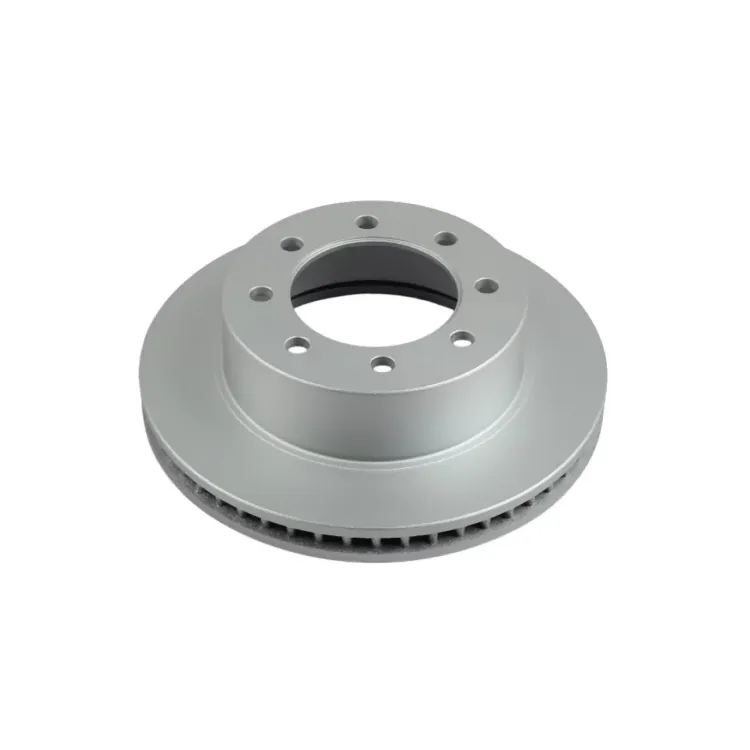
Traditional brake discs are mostly made of cast iron, but they are heavy, prone to wear, and their braking performance fluctuates greatly with temperature, making it difficult to meet the high-efficiency requirements of modern automobiles. Ceramic composite brake discs, with their significant lightweight advantage (reducing the overall vehicle weight by about 15%) and improved high-temperature resistance by more than 50%, effectively eliminate the "brake fade" problem and are being rapidly applied in high-performance sedans and sports cars. Secondly, high-silicon molybdenum cast iron material undergoes special treatment, increasing its hardness by 20%, greatly improving its wear resistance and resistance to hot cracking, making it suitable for widespread use in medium and heavy-duty commercial vehicles.
These advanced materials not only improve braking response speed but also enhance the stability of the braking process, reducing uneven braking force caused by overheating and providing a solid guarantee for driving safety.
Stricter international environmental standards, especially the restrictions on brake dust emissions in the EU and North America, have greatly promoted the research and application of low-dust brake discs. According to the International Automotive Parts Association, the global low-dust brake disc market is projected to grow at a compound annual growth rate of over 12%, exceeding $8 billion in market size by 2026.
Low-noise design and highly recyclable materials have become key areas of focus for manufacturers. By optimizing brake structure and alloy formulation, noise levels can be reduced by 3-5 decibels, and the recyclability of brake disc materials can be increased to over 70%, effectively responding to the concept of a green circular economy.
With the increasing penetration rate of new energy vehicles globally, regenerative braking systems are gradually becoming the mainstream braking mode. This system emphasizes the recovery of braking energy, achieving most of the deceleration through an electric motor. This reduces the frequency of use of traditional brake discs, resulting in lower wear and tear requirements. At the same time, it demands more sensitive braking response to meet the needs of rapid switching of braking force and smooth transition of regenerative braking force.
Currently, the market demands approximately 30% higher wear resistance for brake discs and approximately 20% shorter braking response time to adapt to the high-frequency starts and stops under regenerative braking mode, reduce maintenance costs, and enhance the overall vehicle range.
Heavy-duty trucks, due to their heavy loads and long mileage, face immense challenges from heat and mechanical fatigue in their braking systems. In 2026, brake disc technology will focus on thicker disc designs and the application of high-strength alloys to improve resistance to thermal fatigue. By optimizing metal grain structure and coating technology, brake disc life is expected to increase by 40% and reduce the risk of thermal cracking caused by brake overheating.
These improvements ensure safety, enhance economy, significantly reduce operating and maintenance costs, and meet the stringent reliability requirements of the heavy transport industry.
Driven by both material innovation and policy support, the global brake disc market is projected to maintain an average annual growth rate of 6-8% until 2026. The increasing proportion of new energy vehicles is fueling a surge in demand for specialized high-performance brake discs, while the heavy-duty transportation industry is increasing its demand for customized designs that prioritize durability and safety, creating a multi-tiered market demand structure.
In the future, environmentally friendly and energy-saving green braking materials, intelligent brake disc monitoring systems, and modular designs will become the focus of competition. Enterprises need to strengthen R&D investment and cross-industry cooperation, grasp technological trends, and enhance product differentiation advantages in order to stand out in the fierce global competition.
 253
|
253
|
 brake disc quality control automotive brake disc manufacturing Laizhou Guanzhuo brake discs high precision brake discs brake disc testing process
223
|
Brake disc compatibility High - precision positioning holes European E - mark certification OEM brake disc customization Brake system interface compatibility design
35
|
EMARK certified brake linings automotive brake lining standards VCA COP audit brake system quality management international brake component certification
270
|
Passenger car brake disc selection Anti - rust treatment technology comparison Brake disc warranty policy Cost - effective brake discs Supply chain procurement risk management
101
|
brake kit selection guide brake kit compatibility judgment brake kit installation checklist ABS ring kit usage tutorial car modified brake system
brake disc quality control automotive brake disc manufacturing Laizhou Guanzhuo brake discs high precision brake discs brake disc testing process
223
|
Brake disc compatibility High - precision positioning holes European E - mark certification OEM brake disc customization Brake system interface compatibility design
35
|
EMARK certified brake linings automotive brake lining standards VCA COP audit brake system quality management international brake component certification
270
|
Passenger car brake disc selection Anti - rust treatment technology comparison Brake disc warranty policy Cost - effective brake discs Supply chain procurement risk management
101
|
brake kit selection guide brake kit compatibility judgment brake kit installation checklist ABS ring kit usage tutorial car modified brake system