


.png?x-oss-process=image/resize,h_100,m_lfit/format,webp)
.png?x-oss-process=image/resize,h_100,m_lfit/format,webp)
.png?x-oss-process=image/resize,h_100,m_lfit/format,webp)

Many private car owners face one crucial question: How often should you replace your brake discs? Contrary to the common advice from some 4S shops suggesting a fixed replacement interval of 20,000 kilometers, the truth is more nuanced. Over-replacing wastes your money, while under-replacing risks your safety.
The key to smart maintenance is combining "time & mileage" with "wear status" — and here are two practical self-test methods to help every driver get it right.
This beginner-friendly method helps you spot obvious signs that your brake discs may need replacement without specialized equipment.
Case Insight: One driver neglected steering wheel vibrations, leading to severe brake disc deformation. The subsequent repair costs more than double a timely replacement.
This approach provides quantifiable data to make informed decisions about brake disc health.
Use a caliper gauge to measure the brake disc thickness at its thinnest point:
| Original Thickness | Minimum Safe Thickness | Replacement Threshold |
|---|---|---|
| 28 mm | 25 mm | ≤ 25 mm |
When your measurement reaches or falls below the minimum safe thickness, it's time to replace.
To detect brake disc deformation:
We recommend a high-precision caliper under $20, ideal for home mechanics to accurately monitor brake disc thickness. (Shopping links and tutorials are widely available.)
| Vehicle Category | Recommended Check Interval | Remarks |
|---|---|---|
| Family Sedans (e.g., VW, Toyota) | 30,000 - 50,000 km for regular city commute | Earlier (20,000-30,000 km) if used intensively (ride-hailing, frequent stops) |
| Performance Cars (e.g., BMW, Audi) | 60,000 - 80,000 km, especially with ceramic discs | Higher resistance to wear due to advanced materials |
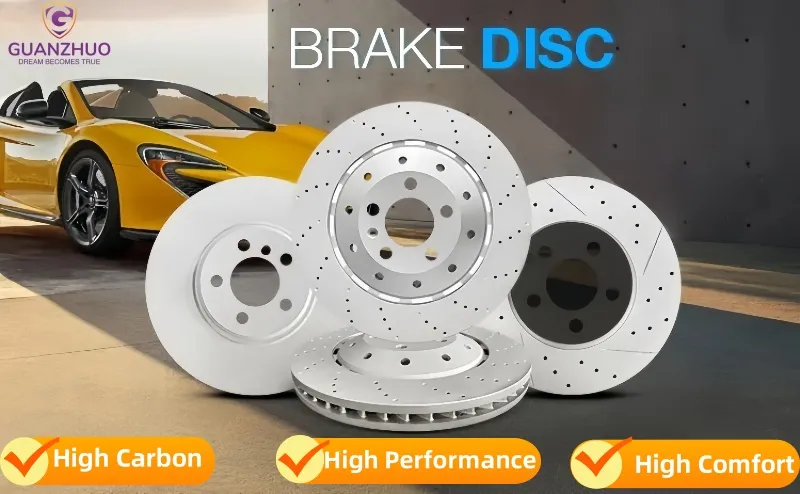
For most everyday vehicles, Laizhou Guanbo's cast iron brake discs offer a balanced combination of cost-effectiveness and durability. Their products fit a broad range of family cars, ensuring reliable braking performance and longer service life.
 296
|
296
|
 IATF TS16949 certified brake bolts automotive brake system components corrosion resistant brake fasteners R90 E-mark certification anti-rust packaging technology
168
|
high carbon steel brake disc wear-resistant brake disc commercial vehicle brake upgrade corrosion-resistant brake components global compatible brake disc
316
|
brake drum rust protection commercial vehicle brake corrosion prevention freeze-thaw cycle brake drum maintenance anti-rust coating for brake drums salt spray resistant brake components
113
|
IATF TS16949 certification for brake pads E-MARK R90 compliance ceramic brake pads for trucks commercial vehicle braking system heavy-duty truck safety standards
79
|
Brake kit selection guide ABS ring gear kit material comparison Foreign trade brake parts selection Brake system adaptability judgment High - performance brake kit application
IATF TS16949 certified brake bolts automotive brake system components corrosion resistant brake fasteners R90 E-mark certification anti-rust packaging technology
168
|
high carbon steel brake disc wear-resistant brake disc commercial vehicle brake upgrade corrosion-resistant brake components global compatible brake disc
316
|
brake drum rust protection commercial vehicle brake corrosion prevention freeze-thaw cycle brake drum maintenance anti-rust coating for brake drums salt spray resistant brake components
113
|
IATF TS16949 certification for brake pads E-MARK R90 compliance ceramic brake pads for trucks commercial vehicle braking system heavy-duty truck safety standards
79
|
Brake kit selection guide ABS ring gear kit material comparison Foreign trade brake parts selection Brake system adaptability judgment High - performance brake kit application


.png?x-oss-process=image/resize,h_800,m_lfit/format,webp)


