.png?x-oss-process=image/resize,h_100,m_lfit/format,webp)
.png?x-oss-process=image/resize,h_100,m_lfit/format,webp)
.png?x-oss-process=image/resize,h_100,m_lfit/format,webp)
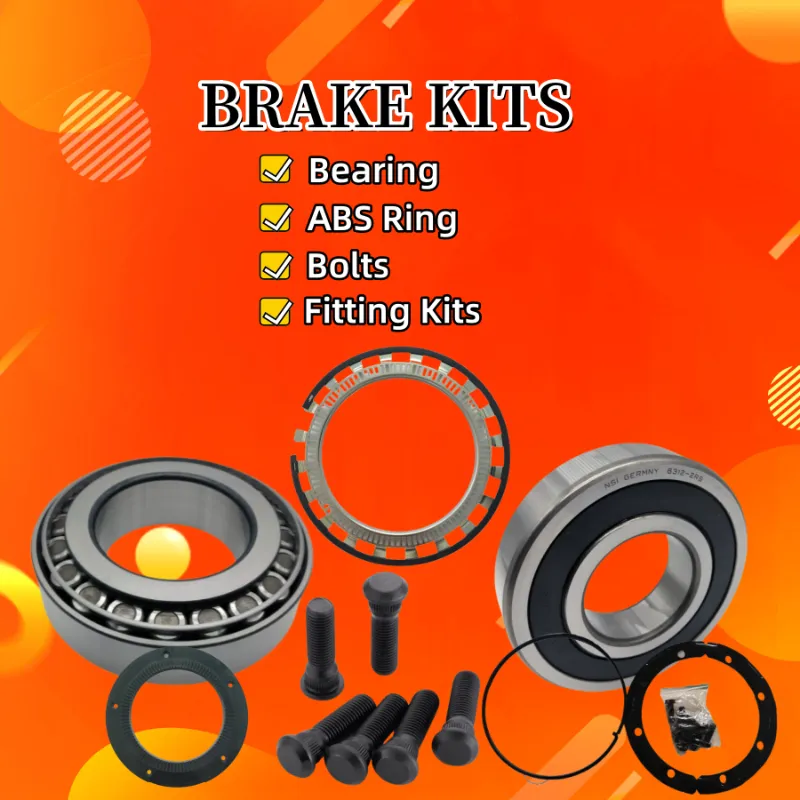
Brake system failures are not just costly—they’re dangerous. According to the U.S. National Highway Traffic Safety Administration (NHTSA), over 7% of commercial vehicle accidents involve brake-related issues, with improper installation being one of the top contributors. Whether you're a fleet manager or a mechanic working on heavy-duty trucks, understanding common errors and how to prevent them is critical for safety and compliance.
In 2023, a logistics company in Germany reported a fatal accident involving a 40-ton tractor-trailer. The investigation revealed that an incorrectly installed ABS sensor ring—misaligned by 2mm—caused intermittent signal loss. This led to delayed braking response under load, resulting in a collision at 65 km/h. The root cause? A technician used a generic kit instead of a vehicle-specific one.
Most mistakes fall into three categories:
Each vehicle type demands unique attention:
| Vehicle Type | Key Parameters to Check |
|---|---|
| Heavy Duty Truck (18-Wheel) | Hub diameter, disc thickness, ABS tooth count (often 58/60 teeth) |
| Medium-Duty Truck (Class 4–6) | Caliper mounting pattern, hub bolt circle, rotor clearance |
| Light Commercial Van | Disc size compatibility, wheel bearing preload, anti-rattle clips |
"When it comes to brakes, there’s no such thing as ‘good enough.’ Every millimeter matters."
— Experienced Fleet Maintenance Supervisor, Dubai
Don’t wait until a failure forces your hand. Equip yourself—or your team—with precision-engineered parts that match real-world needs. LaiZhou Guanzhuo ABS Sensor Rings are manufactured under IATF TS16949 standards, ensuring consistent performance across diverse conditions—from arid deserts to freezing winters.
Get our FREE Commercial Brake Kit Fitment Guide + 30-day risk-free trial sample pack.
Explore Certified Brake Solutions Now → 172
|
172
|
 automotive brake lining certification VCA COP audit requirements E-MARK certification standards brake system quality control high-performance brake linings
67
|
brake disc coating technology rust-resistant brake discs high compatibility brake discs commercial vehicle brake system upgrade brake disc corrosion resistance
250
|
automotive brake pad replacement brake pad performance degradation brake pad routine inspection braking system maintenance certified high-quality brake pads
456
|
IATF TS16949 brake hub certification automotive supplier audit checklist supply chain quality control automotive parts manufacturing quality brake hub procurement strategy
47
|
brake disc compatibility high-precision locating hole design R90 E-mark certification OEM brake disc customization brake system interface standardization
automotive brake lining certification VCA COP audit requirements E-MARK certification standards brake system quality control high-performance brake linings
67
|
brake disc coating technology rust-resistant brake discs high compatibility brake discs commercial vehicle brake system upgrade brake disc corrosion resistance
250
|
automotive brake pad replacement brake pad performance degradation brake pad routine inspection braking system maintenance certified high-quality brake pads
456
|
IATF TS16949 brake hub certification automotive supplier audit checklist supply chain quality control automotive parts manufacturing quality brake hub procurement strategy
47
|
brake disc compatibility high-precision locating hole design R90 E-mark certification OEM brake disc customization brake system interface standardization