.png?x-oss-process=image/resize,h_100,m_lfit/format,webp)
.png?x-oss-process=image/resize,h_100,m_lfit/format,webp)
.png?x-oss-process=image/resize,h_100,m_lfit/format,webp)
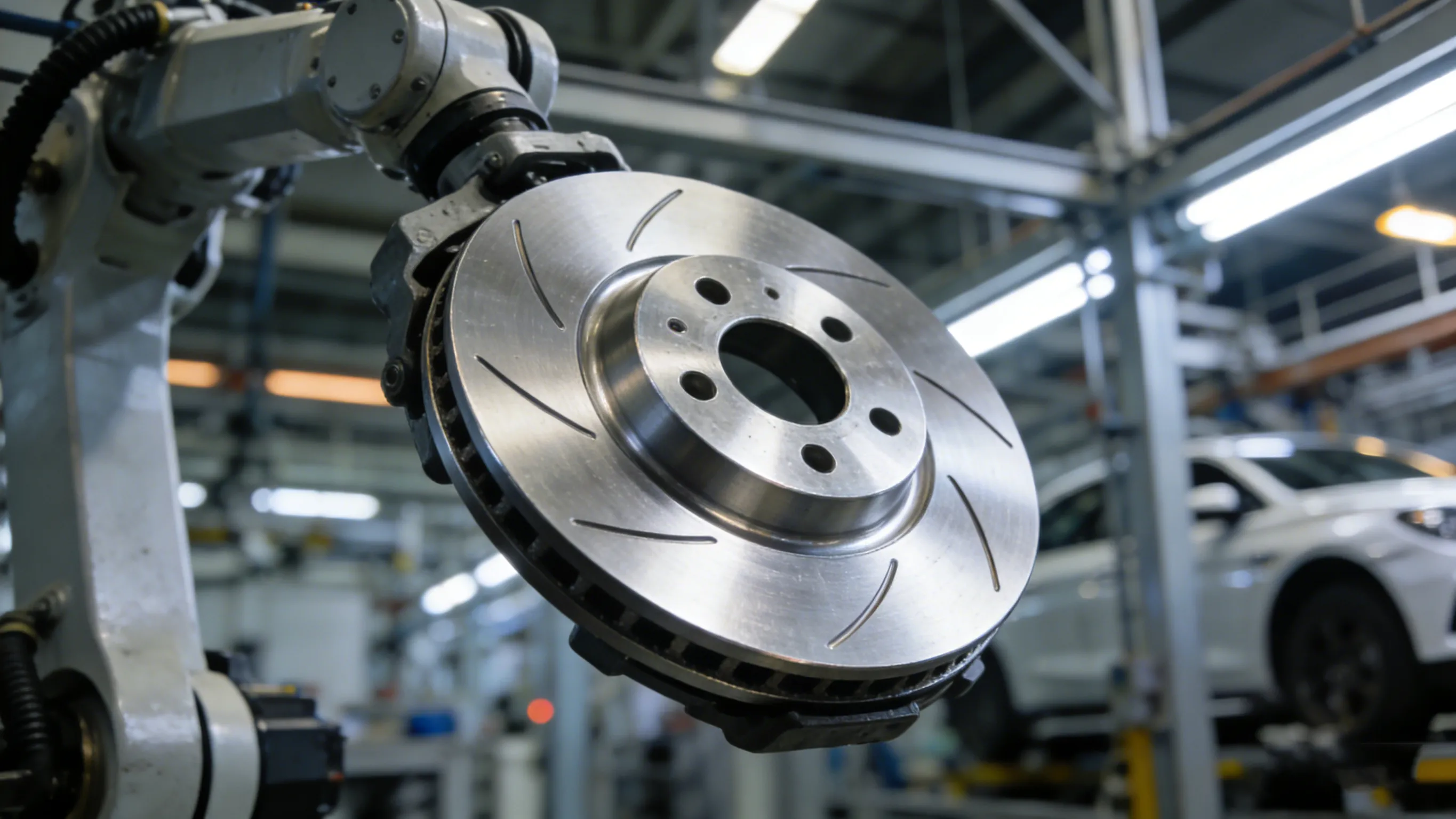
In the Middle East, the combination of high temperatures, dust storms, long highway distances, and frequent starts and stops causes brake discs to exhibit problems earlier than in other regions: accelerated wear, heat fade, vibration and abnormal noise, and longer braking distances. Many fleets have reported that the same vehicle model can have brake discs lasting 80,000–120,000 km in temperate regions, but in conditions with heavy dust, high temperatures, and frequent inclines/congestion, the lifespan may drop to 50,000–80,000 km (depending on load, driving habits, brake pad material, and the compatibility with the braking system).
Below, we share four practical brake disc maintenance tips based on common usage scenarios of Middle Eastern fleets: from high-temperature maintenance and wear detection to replacement timing and material matching, to help you prevent potential problems from occurring and reduce repair and downtime costs.
In the Middle East, summer surface temperatures are often significantly higher than ambient temperatures. During long downhill stretches, frequent braking, or high-load conditions, the surface temperature of brake discs can rise rapidly. Brake discs are most vulnerable to two things at high temperatures: thermal shock and the propagation of thermal cracks . Many after-sales disputes are not due to "poor quality" brake discs, but rather to inappropriate use and maintenance methods.
In fleet management, "high-temperature braking behavior" can be incorporated into a short driver training program : for the same route and load, optimizing braking habits can often increase brake disc life by 10%–25% and significantly reduce complaints about high-temperature noise and vibration.
When sand and dust enter the wheel ends, they create an abrasive effect between the brake pads and the brake discs, resulting in more noticeable grooves on the brake disc surface, abnormal wear on the brake pads, and increased braking noise. In Middle Eastern racing teams, many "sudden abnormal noises" are essentially tribological changes caused by sand and dust combined with high temperatures, rather than sudden component failure.
| project | Recommended frequency | Key observation | Risks that can be reduced |
|---|---|---|---|
| Brake disc surface | Every 2,000–5,000 km or per week | Grooves, blue spots, hot cracks, rusted edges, and localized polishing abnormalities | Vibration, increased braking distance, and disc crack propagation |
| Brake pad thickness/uneven wear | Every 5,000–10,000 km | Differences between left and right/inner and outer pieces, breakage, vitrification (shiny and hardness). | Plate-biting, screaming, heat decay |
| Guide pin/caliper return | Every 10,000–20,000 km | Poor return to center, dry lubricant, damaged sheath allowing sand to enter. | One-sided overheating, uneven wear, hot spots on the disc surface |
| Wheel end cleaning | Depending on the working conditions: During periods of heavy sandstorms, weekly [operations may be permitted]. | Does the cleaning method avoid thermal shock? Does it involve high-pressure direct impact on the seals? | Seal damage, abnormal wear, premature failure |
Tip: Many racing teams combine wheel-end inspections with tire rotation/inflation for greater efficiency. If you persist for 4-8 weeks, abnormal trends will become very clear: which lines are more damaging to brake discs, which drivers have smoother braking habits, and which vehicles have poorer caliper return, allowing for targeted maintenance .
When replacing brake discs, the worst thing you can do is rely on guesswork. In the hot and sandy conditions of the Middle East, brake discs can wear down and become thinner , or they can develop thermal cracks or uneven thickness (DTV) , causing vibration. It is recommended that the fleet establish a simple but reusable set of judgment rules: those that can be measured, clearly documented, and clearly communicated.
Replacement timing should prioritize safety : once the minimum thickness (MIN TH) is reached or the risk of cracking is uncontrollable, don't gamble on "it can still run for a while." In fleet operations, the loss from an unplanned downtime often far outweighs the cost of timely replacement.
| Judgment Item | Reference threshold | Typical manifestations | Suggested actions |
|---|---|---|---|
| Thickness less than MIN TH | Refer to the engraving on the disc/manual (common allowance 2–4 mm). | Brakes become softer, heat fade becomes more pronounced, and heat dissipation capacity decreases. | Replace immediately |
| DTV exceeded the standard | 0.015–0.030 mm (reference) | Pedal pulsation, steering wheel vibration, becoming more and more noticeable as driving. | Inspect the caliper return/assembly surface; replace the disc if necessary. |
| Through crack or crack propagation is rapid | It appears to penetrate, extend to the edge, or show significant growth. | High-speed braking is unstable and noise increases. | Replace immediately and trace the cause (overheating/uneven wear/mismatch). |
| Deep grooves/gnawing | Visible to the naked eye, accompanied by abnormal brake pads | Increased braking noise and dust, abnormal brake pad life | Inspect the brake pad material and check for sand and dust intrusion; replace if necessary. |
A common misconception among Middle Eastern racing teams is that simply replacing the brake discs with "stiffer" ones will solve the problem once and for all. In reality, brake discs are system components; their lifespan and stability often depend on the matching of the disc and pad friction pairs , the cleanliness of the mounting surfaces , the caliper's return to its original position, and the wheel end seal . Upgrading a single component can have side effects, such as overly stiff brake pads causing disc wear, increased noise, or more pronounced brake fade.
If your fleet frequently experiences situations where "some bikes from the same batch, on the same route, have brake discs that keep failing while others are very durable," it's usually not a matter of luck, but rather a combination of differences in driving behavior, assembly consistency, and caliper condition . By meticulously checking and recording these differences, the problem becomes manageable.
For operating conditions characterized by high temperatures and dust, brake discs should prioritize: high-temperature stability , wear resistance and resistance to thermal cracking , and compatibility with vehicle model/brake pads. Our brake discs are made of high-temperature resistant and wear-resistant materials , optimized for friction and heat dissipation in high-heat-load scenarios common in the Middle East, and have passed local compliance certifications in the Middle East , making them more suitable for the long-term operational needs of local fleets.
If you are working on your fleet's annual maintenance plan or wheel end standardization, we also support bulk purchases and provide free maintenance guidance , including inspection frequency recommendations, wear assessment record templates, and troubleshooting methods for common faults (vibration/whistling/uneven wear/crack expansion), helping you to address after-sales issues proactively in your daily management.
Send us your vehicle information, usage scenarios (heavy load/long downhill/urban delivery/highway), and current brake disc issues, and we will provide selection and maintenance recommendations more relevant to Middle Eastern operating conditions.
Get brake disc solutions and free maintenance guidance for Middle Eastern racing teams
 420
|
420
|
 Automotive brake shoe international certification VCA COP audit E - Mark certification technical requirements Braking system quality management Automotive brake shoe design standards
293
|
Commercial vehicle brake disc material selection GG20 gray iron brake disc Brake disc anti - rust treatment technology Commercial vehicle braking system safety Brake disc dynamic balance test
124
|
Commercial vehicle brake disc selection E-MARK R90 certified brake discs High-performance brake systems High-carbon gray cast iron brake discs Brake disc surface treatment
146
|
Common Misconceptions about Brake Disc Installation in the United States Positioning hole accuracy Turning process DOT certified brake discs American auto repair shop brake discs
43
|
commercial vehicle brake drum rust prevention humid area brake drum protection brake drum oil seal rust prevention brake drum spray coating anti-corrosion commercial vehicle brake system corrosion protection
Automotive brake shoe international certification VCA COP audit E - Mark certification technical requirements Braking system quality management Automotive brake shoe design standards
293
|
Commercial vehicle brake disc material selection GG20 gray iron brake disc Brake disc anti - rust treatment technology Commercial vehicle braking system safety Brake disc dynamic balance test
124
|
Commercial vehicle brake disc selection E-MARK R90 certified brake discs High-performance brake systems High-carbon gray cast iron brake discs Brake disc surface treatment
146
|
Common Misconceptions about Brake Disc Installation in the United States Positioning hole accuracy Turning process DOT certified brake discs American auto repair shop brake discs
43
|
commercial vehicle brake drum rust prevention humid area brake drum protection brake drum oil seal rust prevention brake drum spray coating anti-corrosion commercial vehicle brake system corrosion protection