.png?x-oss-process=image/resize,h_100,m_lfit/format,webp)
.png?x-oss-process=image/resize,h_100,m_lfit/format,webp)
.png?x-oss-process=image/resize,h_100,m_lfit/format,webp)
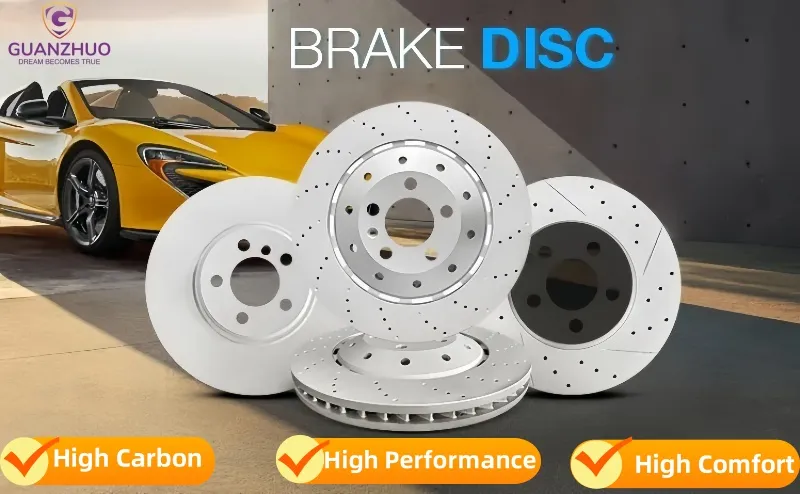
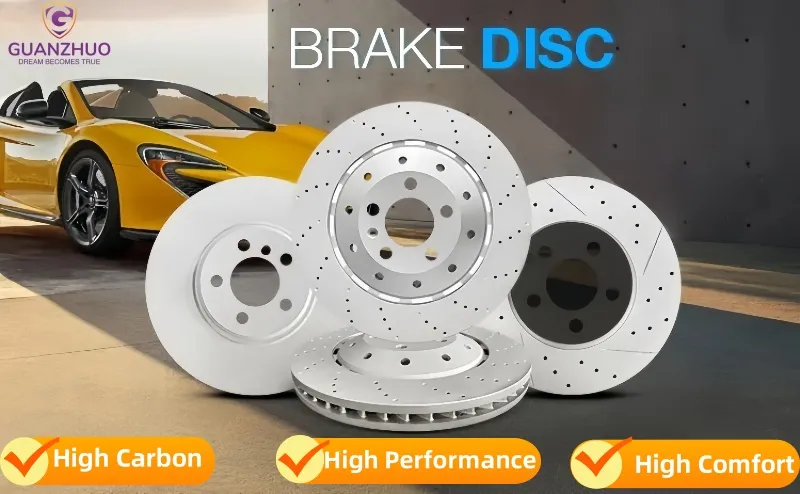
In routine brake maintenance, many problems are not due to faulty parts, but rather to details in the installation process that cause brake discs to make abnormal noises, vibrate, and increase braking distance. We have compiled common feedback from local customers and actual work orders from our stores to clarify the common misconception that leads to the "highest rework rate": why what seems like a simple locating hole, a machining operation, or a torque adjustment can ultimately escalate into complaints and re-inspections of the entire braking system.
Based on follow-up calls from North American stores, customer complaints often focus on three key issues: noise , vibration , and changes in brake pedal feel . These issues typically appear within 50–500 miles of installation, and are particularly noticeable in urban driving conditions and in commercial vehicles with frequent stop-and-go traffic.
| Customer feedback (typical expression) | Common triggering scenarios | Common root causes in stores (high frequency) |
|---|---|---|
| There is a squeaking/metallic friction sound when braking, which is more noticeable at low speeds. | The contact surfaces were not thoroughly cleaned after replacing the brake discs/pads, and proper break-in procedures were not performed. | Rust/oil stains on the mating surface between the wheel hub and the disc cap, excessive runout, and improper lubrication of the gasket and guide pin. |
| "Steering wheel shakes and pedal bounces during high-speed braking" | 60–75 mph: Light braking or downhill braking | Additional lateral runout caused by installation, improper machining processes, and uneven wheel hub end faces. |
| "The braking distance feels longer, and the pedal feels weaker." | Frequent heavy braking and dragging occurred shortly after replacement. | Improper break-in can lead to uneven transfer of the friction layer, poor caliper return, and uneven torque, resulting in localized hot spots. |
Based on experience, in North American dealerships, approximately 35%–50% of brake-related rework is not due to material issues, but rather to deficiencies in three process areas: assembly surface treatment, positioning and runout control, and fastening specifications . (This percentage is based on industry experience and may vary depending on the vehicle model and operating conditions.)
Many auto repair shops, when quickly replacing parts, assume that simply fitting a new brake disc onto the wheel hub is sufficient. However, in actual assembly, the accuracy of the locating holes (center hole/locating hole coaxiality) directly affects whether the brake disc can be stably centered. If the centering is not ideal, even if you apply the correct torque later, it may lock up the "eccentricity," leading to early vibration and uneven wear.
These types of work orders are common for commercial pickup trucks, vans, and light to medium-duty trucks. The customers most often say, "It was fine right after installation, but it started shaking after driving on the highway for a few days." During the store's re-inspection, they often find that there are rust spots or burrs on the mating surface of the disc and the wheel hub, or that the center positioning of the disc is too tight or too loose, making it increasingly difficult to control the runout after repeated disassembly and reassembly.
Recommended control parameters (for reference): Many North American technicians aim to control the lateral runout of the brake disc after assembly to within the range of ≤0.002–0.003 in (approximately 0.05–0.08 mm) ; if it exceeds this range, the probability of pedal pulsation and high-speed vibration will increase significantly (especially under heavy load and heat fade conditions).
A practical approach for stores: Clean the wheel hub end face (remove rust, burrs, and oil film) → Test fit to confirm "full circumferential contact" between the disc cap and the wheel hub → Measure runout with a dial indicator → If necessary, perform wheel hub indexing or treat the wheel hub end face before deciding whether to replace the disc or wheel hub components. Using positioning as the "assembly benchmark" will significantly reduce the rework rate.
Many shops still perform reprocessing on brake discs to eliminate surface unevenness or to match old pads. However, in reality, turning is not simply about "flattening" the surface; it requires systematic control over flatness, parallelism, surface finish, and thickness allowance. Incorrect processing may result in a "smoother" appearance in the short term, but in the medium term, it can lead to hot spots, DTV (thickness variation), and brake vibration.
From a safety perspective, once the thickness is reduced to near the lower limit during machining, the braking system becomes more reliant on the condition of the brake pads and calipers. Any slight jamming can be amplified into abnormal temperatures. For commercial vehicles that frequently tow trailers, carry heavy loads, and travel on mountain roads, the heat capacity of the brake discs is crucial for stability. Blindly machining the brake discs is a classic example of "saving a little money but spending a lot more."
Practical suggestions (for reference): If the vehicle exhibits obvious pedal pulsation or high-speed vibration, prioritize cleaning the wheel hub end face, checking for vibration, and indexing . When the brake disc thickness is close to the minimum thickness (e.g., only 0.5–1.0 mm remaining), it is recommended to replace it directly rather than rework it to reduce the risk of heat fade and rework.
This is a common yet easily overlooked issue in auto repair shops: uneven torque on wheel nuts/bolts, or failure to tighten them in a diagonal sequence, can cause slight deformation and misalignment of the brake discs. The problem may not be immediately apparent, but it will gradually become visible after a warm-up cycle (several high-speed braking maneuvers).
Experience suggests that in quick repair scenarios, switching from an impact wrench to a torque wrench for the "final torque" can significantly reduce rework (vibration/noise/uneven wear) related to clamping force. For commercial vehicle fleet customers, this stability is often more valuable than "being 10 minutes faster".
If you need a practical, implementable version that new technicians can follow, the following list focuses more on "common vehicle models and rhythms in stores." The core objectives are twofold: proper installation , even clamping , and stable operation .
| node | Must be done | Recommended test/view | Common consequences of omitting items |
|---|---|---|---|
| After disassembly | Inspect the wheel hub end face for rust and clean the mating surface. | Are there any obvious pits/warping on the end face of the wheel hub? | New properties may also create artificial fluctuations to attract customers back to the store in the short term. |
| Trial fitting positioning | Confirm that the center hole/positioning hole fits smoothly and is in good contact with the rest of the hole without any gaps. | Create an index if necessary (retest the position of the rotating disk). | High-speed vibration and pedal pulsation are more difficult to diagnose. |
| Tighten the upper wheel | Diagonal sequence, segmented torque application, final torque wrench confirmation. | Record the torque value and the re-inspection mileage (if applicable). | Uneven clamping force causes DTV and vibration |
| Completion and commissioning | Standardized break-in and road test | Confirm there are no abnormal noises, no deviation, and no pedal pulsation. | Short-term abnormal noise complaints and negative reviews of "vibration immediately after replacement". |
Behind many installation problems lies the compromise that stores are forced to make between "time, compatibility, and inventory": temporary ordering, cross-brand mixing, or obtaining batch parts with greater tolerance fluctuations. For auto repair shops, a more controllable brake disc supply system can often bring three direct benefits:
Our brake discs are DOT certified and compatible with mainstream commercial vehicles; we support quick shipping from stock and offer flexible MOQ , making them ideal for small auto repair shops and fast repair chains for inventory and turnover. For your shop, you don't need to waste energy on "repeated comparisons, reassembly rework, and customer explanations," but rather leave your workstation efficiency to higher-value services.
After submitting vehicle information (Year/Make/Model/Configuration/Axle), we can assist in verifying compatibility and installation details, reducing assembly risks.
Not necessarily. More commonly, during store inspections, excessive lateral runout is caused by assembly runout (rust/burrs on the wheel hub end face, unstable positioning, uneven torque), which, after thermal cycling, creates DTV and pedal pulsation. It's recommended to first clean the end face and measure the runout with a dial indicator before considering indexing or checking the condition of the wheel hub and bearings.
Turning should be performed only if the thickness allowance is met, the clamping and centering are accurate, and the surface texture is controllable. If the brake disc is close to the minimum thickness (MIN TH), or if the vehicle is subjected to heavy loads/trailer/frequent braking in mountainous conditions, it is generally recommended to replace it directly to avoid the risk of vibration and brake fade caused by insufficient heat capacity.
The most practical method is to measure runout and then retest using an index : First, install the brake disc and measure the lateral runout once, then rotate the brake disc relative to the wheel hub by a certain angle (index) and retest. If the peak runout varies significantly with the disc position, it may be related to the disc; if the peak runout is basically fixed, prioritize checking the wheel hub end face, bearing/wheel hub assembly, and fastening method.
 469
|
469
|
 brake disc warranty period brake disc mileage guarantee passenger car brake disc selection guide B2B brake disc procurement brake disc anti - rust treatment
128
|
Brake disc wear resistance Rust - proof brake disc High - compatibility brake disc Commercial vehicle brake system upgrade Brake disc selection recommendations
268
|
cast iron brake discs ceramic brake discs brake disc materials brake disc selection vehicle brake system
294
|
brake disc noise brake vibration brake pad wear brake disc runout brake maintenance
46
|
brake disc compatibility E-Mark certified brake discs high-precision locating holes international brake disc standards OEM brake disc customization
brake disc warranty period brake disc mileage guarantee passenger car brake disc selection guide B2B brake disc procurement brake disc anti - rust treatment
128
|
Brake disc wear resistance Rust - proof brake disc High - compatibility brake disc Commercial vehicle brake system upgrade Brake disc selection recommendations
268
|
cast iron brake discs ceramic brake discs brake disc materials brake disc selection vehicle brake system
294
|
brake disc noise brake vibration brake pad wear brake disc runout brake maintenance
46
|
brake disc compatibility E-Mark certified brake discs high-precision locating holes international brake disc standards OEM brake disc customization