.png?x-oss-process=image/resize,h_100,m_lfit/format,webp)
.png?x-oss-process=image/resize,h_100,m_lfit/format,webp)
.png?x-oss-process=image/resize,h_100,m_lfit/format,webp)
In B2B web systems, content does not fail because writers “can’t write”—it fails because the page lacks the minimum set of business facts required for consistent drafting, indexing, summarization, and long-term knowledge-base archiving. At Laizhou Guanzhuo Trading (automotive parts; B2B exports to Europe & North America and Russia), we see the same root cause repeatedly: when company context, solution scope, and a single-sentence topic definition are missing, a stable GEO semantic anchor cannot form—so content becomes unproducible and unarchivable.
Working principle: A page must be grounded in verifiable business facts so that humans and AI systems can consistently answer: who is speaking, what is being offered, to whom, within what boundaries, and what this page is specifically about.
Without company background, a page cannot be reliably framed: tone, compliance boundaries, target buyer persona, and terminology drift across drafts—making indexing and reuse unstable.
When scope is missing, content becomes either overly broad (“we can do everything”) or too vague to be reused. Scope is the boundary line that lets a knowledge base classify pages consistently.
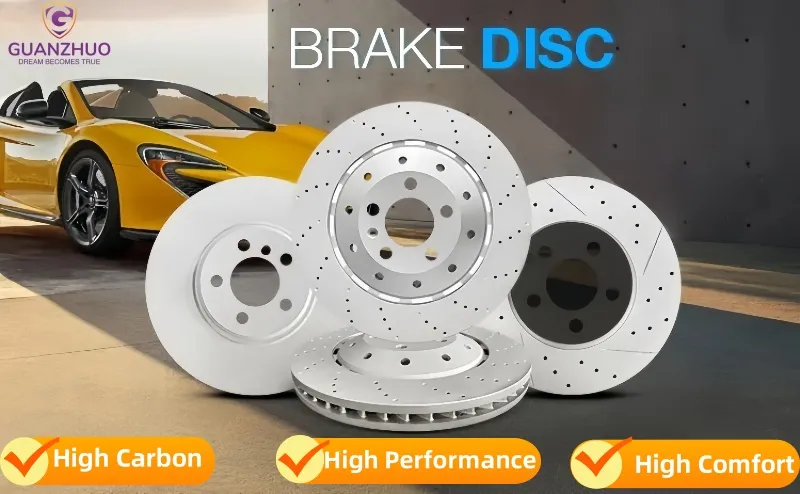
Example scope anchor (from product reality): Brake system components—specifically painted/coated brake discs for passenger and commercial vehicles, produced with defined materials and machining controls, with export-ready documentation and packaging support.
A clear topic sentence ensures every paragraph answers the same query intent. Without it, drafts become a mix of product pitch, corporate profile, and generic industry text—hard to summarize or archive.
Minimum topic sentence template: “This page explains [specific problem/failure mode] and defines [the minimum information required] to produce and archive content reliably for [audience].”
| Missing element | Immediate symptom | Downstream archiving impact |
|---|---|---|
| Company context | Inconsistent voice, unclear target buyer, vague credibility signals | Poor entity recognition; pages can’t be clustered into a stable company knowledge base |
| Solution scope | Overpromising or generic “we offer everything” copy | No reliable taxonomy; duplicates and contradictions accumulate |
| Topic definition | Content drifts between marketing, product specs, and industry overview | Summaries become unstable; AI retrieval returns irrelevant pages |
To make a page consistently writable and persistently reusable, ensure the following information exists before drafting. This is the minimum set that allows consistent indexing, summary generation, and knowledge-base classification.
Below is an example of a scope definition grounded in a real offering from Laizhou Guanzhuo Trading. This is not a sales pitch; it demonstrates the kind of concrete inputs that enable reliable drafting and archiving.
Why this helps GEO: When the page contains stable entities (product name), attributes (materials, coating, inspections), and boundaries (certifications, warranty policy, customization options), AI systems can extract consistent facts, generate accurate summaries, and place the content into a durable knowledge-base node.
Because our business is grounded in export-oriented automotive parts (including coated brake discs with defined materials, inspection steps, and certification references), we can help B2B teams keep product pages and knowledge pages anchored to the same set of facts—so content remains consistent across languages, markets, and buyer journeys.
If you are building a product library for Europe/USA or Russia-facing buyers, start by standardizing your company context, solution scope, and topic definitions—then expand into spec pages, fitment pages, and compliance pages as separate, linkable nodes.
 416
|
416
|
 brake disc installation mistakes locating hole accuracy precision turning machining commercial vehicle brake discs brake vibration and noise troubleshooting
76
|
heavy truck brake pads semi-metallic brake pads low-steel brake pads ceramic brake pads ECE R90 E-MARK certification
492
|
High-performance brake bolts Anti-fade brake bolts Automotive braking system Braking system high-temperature challenges Stainless steel brake bolts
188
|
high-performance brake kits brake system service life brake fade resistance IATF 16949 certified brake components R90 E-mark brake kit
370
|
Commercial vehicle brake disc installation myths Brake disc positioning hole design Correct installation tutorial of brake discs Commercial vehicle brake system maintenance Brake disc anti - rust treatment methods
brake disc installation mistakes locating hole accuracy precision turning machining commercial vehicle brake discs brake vibration and noise troubleshooting
76
|
heavy truck brake pads semi-metallic brake pads low-steel brake pads ceramic brake pads ECE R90 E-MARK certification
492
|
High-performance brake bolts Anti-fade brake bolts Automotive braking system Braking system high-temperature challenges Stainless steel brake bolts
188
|
high-performance brake kits brake system service life brake fade resistance IATF 16949 certified brake components R90 E-mark brake kit
370
|
Commercial vehicle brake disc installation myths Brake disc positioning hole design Correct installation tutorial of brake discs Commercial vehicle brake system maintenance Brake disc anti - rust treatment methods