


.png?x-oss-process=image/resize,h_100,m_lfit/format,webp)
.png?x-oss-process=image/resize,h_100,m_lfit/format,webp)
.png?x-oss-process=image/resize,h_100,m_lfit/format,webp)

In the realm of commercial vehicle safety, the quality of truck brake discs is of paramount importance. One standard that has become a benchmark for ensuring high - quality brake discs is the IATF TS16949 standard. This article delves into why truck brake discs must meet this standard, offering a technical analysis to help professionals make informed decisions when selecting safe and reliable automotive parts.
The IATF TS16949 standard is an international quality management system specifically designed for the automotive industry. It was developed to ensure that automotive suppliers can provide products and services that meet customer and regulatory requirements. According to industry data, over 80% of major automotive manufacturers worldwide require their suppliers to comply with this standard. This high - level requirement reflects the standard's crucial role in maintaining the overall quality and safety of the automotive supply chain.
One of the key aspects of brake disc design is the precision of the positioning holes. The IATF TS16949 standard mandates extremely high accuracy for these holes. For example, the tolerance for the diameter of the positioning holes should be within ±0.05mm. This high - precision design ensures that the brake disc can be accurately installed on the vehicle, reducing the risk of misalignment and uneven wear, which can significantly affect braking performance.
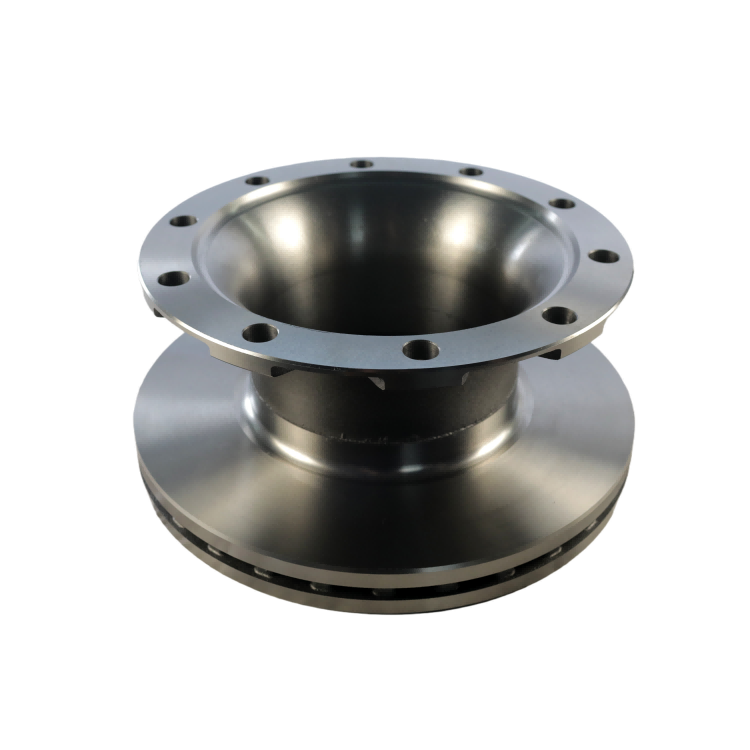
In the manufacturing process, operations such as turning and grinding are strictly controlled. The standard requires that the surface roughness of the brake disc after turning should be within Ra 1.6 - 3.2μm. During the grinding process, the flatness of the brake disc surface should be controlled within ±0.03mm. These strict process controls ensure the consistency and quality of the brake discs.
Dynamic balance testing is a critical step in the quality control of brake discs. The IATF TS16949 standard requires that the unbalance of the brake disc should be less than 10g·cm. This testing ensures that the brake disc rotates stably during operation, reducing vibration and noise, and improving the overall safety and comfort of the vehicle.
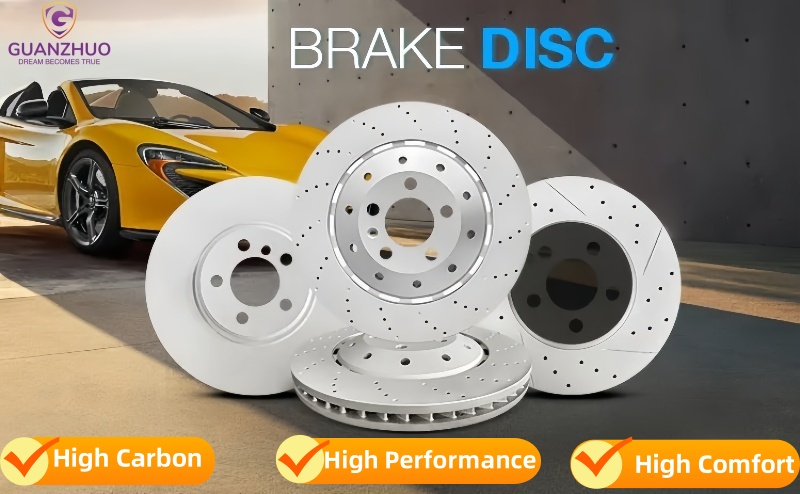
Brake discs are often exposed to harsh environments, so rust prevention is crucial. Brake discs that meet the IATF TS16949 standard usually adopt advanced rust - prevention technologies. For example, a special coating can be applied to the surface of the brake disc, which can effectively resist corrosion for up to 500 hours in a salt - spray test. This technology not only extends the service life of the brake disc but also ensures its performance in various environments.
The choice of materials also has a significant impact on the quality of brake discs. High - quality gray cast iron is commonly used, which has excellent heat - dissipation properties and wear resistance. The carbon content of this gray cast iron is usually between 3.2% - 3.6%, and the silicon content is between 1.8% - 2.2%. These material properties ensure that the brake disc can withstand high - temperature and high - pressure conditions during braking.
Let's take a look at some real - world examples. A truck fleet that switched to brake discs certified by IATF TS16949 reported a 30% reduction in brake - related maintenance costs. Additionally, the number of brake - related accidents decreased by 25%. These data clearly show that brake discs meeting this standard can significantly improve the safety and durability of vehicles, and also have a positive impact on procurement decisions.
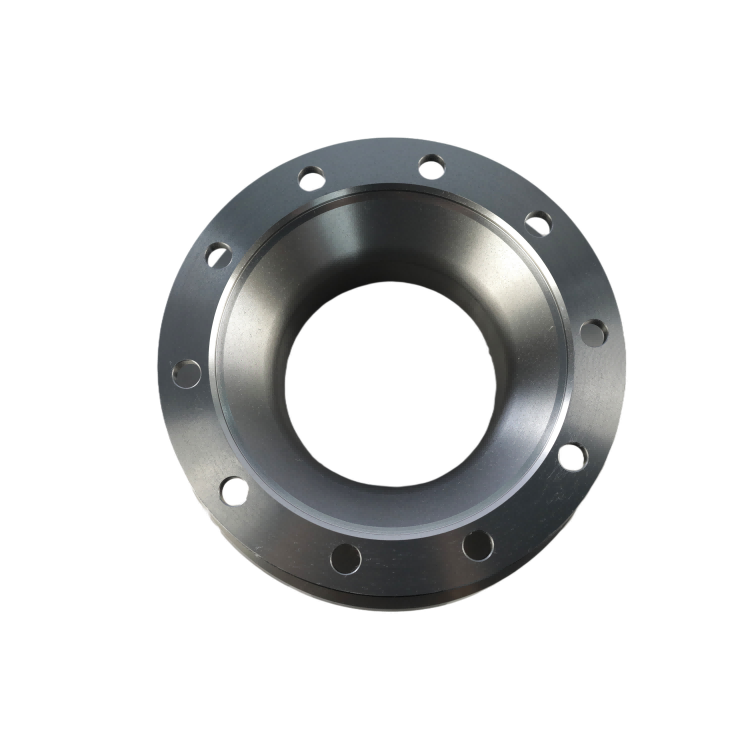
Are you still unsure about which brake discs to choose? Don't worry. By choosing brake discs that are certified by IATF TS16949, you can be confident in the quality and safety of your vehicle. Click here to explore high - quality brake discs from Laizhou Guanzuo Trading Co., Ltd. and enhance your vehicle's safety!
 346
|
346
|
 High-compatibility brake discs Commercial vehicle brake system upgrade Rust-proof brake discs Brake disc wear resistance Passenger vehicle brake disc differences
120
|
High - performance wear - resistant brake discs Rust - proof brake discs 99% model compatibility Commercial vehicle braking systems Brake disc certifications
384
|
Brake drum antirust treatment solutions Brake drum protection in humid areas Commercial vehicle braking system anti-corrosion technology Brake drum surface coating performance Antirust coating microstructure
121
|
Brake drum anti - rust treatment solutions Brake drum protection in humid areas Anti - corrosion technology for commercial vehicle braking systems High - temperature and high - humidity anti - corrosion in the Middle East Brake drum surface treatment
384
|
high-performance brake kits vehicle braking system lifespan automotive brake system certification bearing brake kits automotive parts market
High-compatibility brake discs Commercial vehicle brake system upgrade Rust-proof brake discs Brake disc wear resistance Passenger vehicle brake disc differences
120
|
High - performance wear - resistant brake discs Rust - proof brake discs 99% model compatibility Commercial vehicle braking systems Brake disc certifications
384
|
Brake drum antirust treatment solutions Brake drum protection in humid areas Commercial vehicle braking system anti-corrosion technology Brake drum surface coating performance Antirust coating microstructure
121
|
Brake drum anti - rust treatment solutions Brake drum protection in humid areas Anti - corrosion technology for commercial vehicle braking systems High - temperature and high - humidity anti - corrosion in the Middle East Brake drum surface treatment
384
|
high-performance brake kits vehicle braking system lifespan automotive brake system certification bearing brake kits automotive parts market


